Introduction
In the era of smartphones, IoT devices, and mobile computing, a reliable Mobile Network is essential for communication, work, and entertainment. Mobile networks allow users to access the internet, make calls, send messages, and use applications from virtually anywhere. Understanding how mobile networks function and how to optimize them is critical for both everyday users and IT professionals.
From 3G to 5G technology, mobile networks have evolved to provide faster speeds, lower latency, and improved coverage. However, users often experience slow internet, dropped calls, or weak signals, which can be frustrating and impact productivity. A proper understanding of mobile networks, their types, and best practices can help users maximize connectivity and performance.
This comprehensive guide explains the concept of mobile networks, different technologies, common issues, optimization strategies, and real-world applications. Written with practical experience and technical accuracy, this article is designed for anyone seeking to improve their performance.
What Is a Mobile Network?
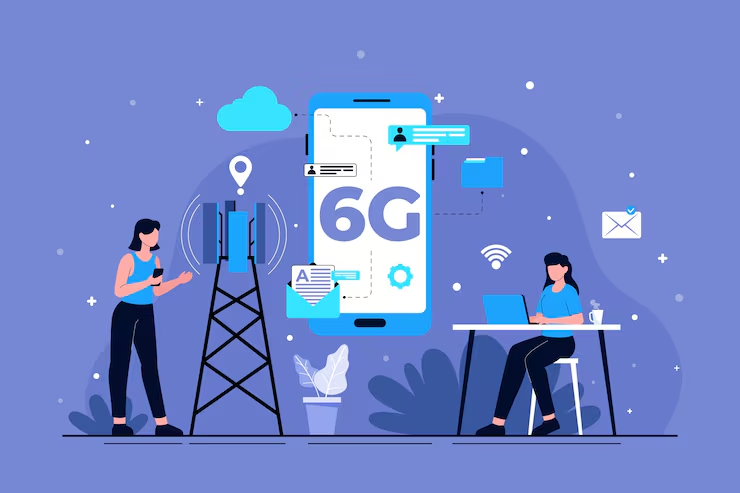
A mobile network is a wireless communication system that allows mobile devices to connect to the internet and other devices using cellular towers. Mobile networks rely on radio frequencies to transmit voice, data, and multimedia content.
Mobile networks consist of three main components:
- Base stations (cell towers): Transmit and receive signals
- Mobile switching centers (MSC): Manage calls and data routing
- Core network: Connects mobile networks to the internet and other networks
Why Mobile Networks Matter
Mobile networks are crucial for:
- Voice and video communication
- Mobile internet browsing and streaming
- Mobile apps and online services
- Emergency communication
For example, a reliable 4G or 5G connection ensures smooth video conferencing for remote work or uninterrupted live streaming for content creators.
Types of Mobile Networks
- 2G (GSM, CDMA): Basic voice and SMS services
- 3G (UMTS, HSPA): Improved internet and multimedia capabilities
- 4G (LTE): High-speed internet for streaming, gaming, and apps
- 5G: Ultra-fast speeds, low latency, IoT integration, and smart city applications
Mobile Network Types
- Public Mobile Networks: Provided by carriers for general consumers
- Private Mobile Networks: Used by organizations for secure internal communication
Understanding these types helps users select appropriate devices and plans to meet their connectivity needs.
How Mobile Networks Work
Mobile networks use a combination of radio waves, towers, and core infrastructure to transmit data.
Step-by-Step Process
- Your mobile device sends data to the nearest cell tower.
- The tower forwards data to the mobile switching center.
- The core network routes the data to the internet or another mobile device.
- Responses are sent back following the same path.
Real-World Example
Streaming a video on a 5G network provides high-resolution playback with minimal buffering due to faster data transmission and low latency.
Common Mobile Network Issues
Despite advances in technology, mobile networks face common challenges that affect user experience.
Frequent Issues
- Slow internet speeds
- Dropped or missed calls
- Weak or no signal in certain areas
- Network congestion during peak hours
Causes
- Physical obstacles like buildings or terrain
- High network traffic
- Device hardware limitations
- Carrier coverage gaps
How to Optimize Your Mobile Network
Optimizing mobile network performance can significantly enhance connectivity and usability.
Practical Tips
- Move to areas with better signal strength
- Restart your device to refresh network connections
- Use WiFi calling where available
- Update mobile device software and firmware
- Choose the appropriate mobile plan for your usage
Advanced Optimization
- Use network signal boosters in weak coverage areas
- Enable 4G/5G LTE settings for faster connectivity
- Manage apps consuming excessive bandwidth
Benefits of a Strong Mobile Network
A reliable mobile network provides multiple advantages:
- Seamless communication for work and personal use
- Faster internet speeds for streaming and downloads
- Better performance for online gaming and virtual meetings
- Access to emergency services anytime, anywhere
Future of Mobile Networks
The future includes expanded 5G deployment, integration with IoT, smart cities, and AI-driven network management. These advancements promise faster speeds, more reliable connections, and enhanced user experiences globally.
Conclusion
A Mobile Network is vital for modern communication, internet access, and productivity. Understanding network types, common issues, optimization techniques, and future trends helps users get the most out of their mobile devices. By following best practices and leveraging available technologies, individuals and businesses can enjoy faster, more reliable, and secure mobile connectivity.
FAQs
1. What is a mobile network?
A mobile network is a wireless communication system enabling voice, data, and multimedia transmission for mobile devices.
2. What are the main types of mobile networks?
2G, 3G, 4G, and 5G, with public and private network variations.
3. Why is my mobile internet slow?
Possible reasons include weak signal, network congestion, or device limitations.
4. How can I improve mobile network performance?
Move to better coverage areas, update device software, or use signal boosters.
5. What is the future of mobile networks?
Expanded 5G, IoT integration, smart cities, and AI-driven network optimization.